
This post may contain affiliate links, which means that I may receive a commission if you make a purchase using these links, with NO additional cost to you.
The garden that’s been feeding my family for seven years—through tight budgets, hard seasons, and everything in between
- My second baby had just been born, and I made the decision to stay home full-time to help with the farm and raise my kids.
We cut our income in half overnight.
I remember standing in what would become our first real garden plot, pregnant and exhausted, doing the math in my head. If groceries didn’t fit in the budget anymore, something had to give. Either I figured out how to grow our own food, or we’d be eating ramen and stress for dinner.
So I planted. Not because it sounded like a fun homesteading project, but because my family needed to eat and the grocery money just wasn’t there.
That garden is still feeding us seven years later. Through tight budgets, lean seasons, bankruptcy, and rebuilding—it works. Some years are better than others, but every single year, that garden has put food on our table.
If you’re reading this from a place of financial strain, trying to figure out how to stretch a grocery budget that’s already breaking, or wondering if growing your own food is actually worth the effort—I see you. And I’m going to tell you the truth about what works, what doesn’t, and what it really takes to feed your family from your own backyard.
Why Growing Your Own Food Matters More Than Ever
Food prices aren’t going down. Supply chains are fragile. And for rural families already dealing with tight margins, every trip to the grocery store feels like a gut punch.
I’ve been growing food for my family for seven years—not as a hobby, but as a survival strategy. When groceries don’t fit in the budget, the garden isn’t optional. It’s how we eat.
Growing your own food isn’t some cute homesteading trend when you’re facing real financial pressure. It’s stewardship. It’s smart budgeting. And it’s one of the few things you can control when everything else feels uncertain.
Here’s what seven years of food gardening has taught me: You don’t need a perfect setup, a Pinterest-worthy garden plan, or even a green thumb. You just need to start with what you’ve got and build from there.
Start Small (Seriously—Smaller Than You Think)
When you’re stressed about feeding your family, the temptation is to plant everything and hope for a miracle harvest. Don’t do that.
Start with 4-6 crops max. Pick things your family actually eats and that grow well in your area:
- Tomatoes – Versatile, productive, and hard to kill
- Green peppers – Productive, easy to freeze, and work in everything
- Lettuce – Quick wins (ready in 30-45 days)
- Beans – Cheap to grow, easy to preserve
- Zucchini – One plant feeds an army (whether you want it to or not)
- Carrots – Store well, grow in cool weather
- Potatoes – High calorie yield per square foot
Choose based on what you’ll actually use. There’s no point growing Swiss chard if your kids won’t touch it.
Make the Most of Whatever Space You Have
You don’t need acreage to feed your family from your garden. I’ve seen apartment balconies produce more food than half-hearted garden plots.
Limited space? Try these:
- Raised beds – Control your soil, easier on your back
- Container gardening – Grow tomatoes, peppers, and herbs in 5-gallon buckets
- Vertical gardening – Beans, peas, cucumbers climb up instead of sprawling out
- Square foot gardening – Pack more into small spaces with intensive planting
Even a 4×8 raised bed can produce hundreds of pounds of food if you plan it right.
Grow Smart, Not Expensive
When money’s tight, you can’t afford to waste resources on fancy fertilizers or pest solutions that don’t work. The good news? If you’re on a farm, you already have most of what you need.
Use what you’ve already got:
- Rusted out stock tanks – Cut drainage holes, fill with soil—free raised beds
- Manure pile – Aged manure is black gold for your garden (just make sure it’s composted first)
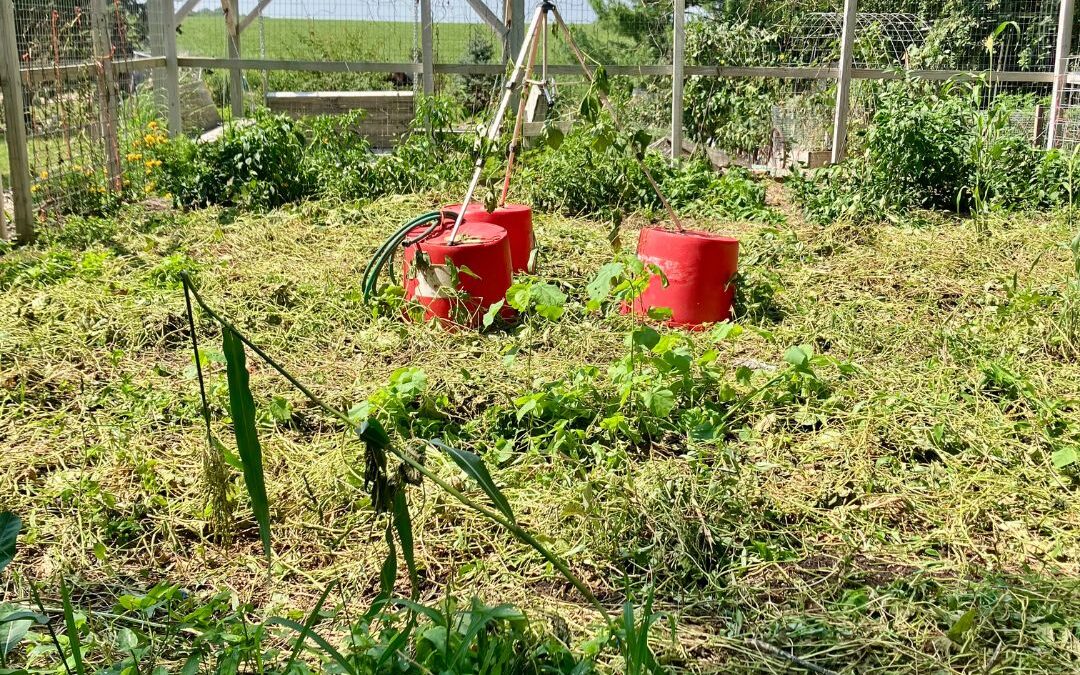
- Rejected hay – Perfect mulch to keep weeds down and moisture in
- Twisted or broken cattle panels – Arch them over the garden for bean/pea/cucumber trellises
- Old pallets – Vertical trellises or compost bin sides
- Companion planting – Marigolds with tomatoes, basil with peppers (natural pest control)
- Save seeds – Heirloom varieties let you replant year after year
- Rainwater collection – Only really necessary if you’re in a drought-prone area
You don’t need to buy everything new. Look around your farm first—there’s probably a solution sitting in the back of the shed or rusting out by the barn.
Get Your Kids Involved (Even If It’s Messy)
Look, I homeschool three kids while running a business and keeping a farm going. I get that adding “garden time” to the schedule sounds like one more thing.
But here’s the truth: Kids who help grow food eat that food. Even picky eaters will try vegetables they planted themselves.
Simple ways to involve kids:
- Let them plant seeds (yes, they’ll put them too deep—it’s fine)
- Give them their own small plot or container
- Teach them to check for ripe produce (turns into a treasure hunt)
- Preserve together—kids can snap beans, wash potatoes, help with freezing
This isn’t just about food. It’s about teaching your children food security, stewardship, and that hard work produces real results.
Keep the Harvest Coming with Succession Planting
One big mistake new gardeners make? Planting everything at once, getting overwhelmed with produce in July, then having nothing in September.
Succession planting means staggered harvests:
- Plant lettuce, radishes, and greens every 2-3 weeks for continuous salads
- Start new bean plants when the first ones start flowering
- Replace early crops (peas, spinach) with warm-season crops (peppers, tomatoes)
If you’re in a short growing season like I am here in Nebraska, focus succession planting on quick crops. Tomatoes, peppers, and brassicas take too long to replant—but greens, beans, and root vegetables? Absolutely.
Preserve What You Grow (Or It’s Wasted)
A garden only saves you money if you actually use what it produces.
Simple preservation methods:
- Freezing – Blanch and freeze green beans, corn, chopped peppers
- Canning – Salsa, tomato sauce, pickles (invest in a pressure canner for long-term savings)
- Dehydrating – Herbs, tomatoes, zucchini chips
- Root cellaring – Potatoes, carrots, winter squash store for months
You don’t have to do everything. Pick one or two methods and master those first. I started with freezing and hot water bath canning because they were straightforward and didn’t require expensive equipment.
This Isn’t About Perfection—It’s About Feeding Your Family
I’ve been doing this for seven years now. Some seasons have been incredible—jars lined up on shelves, freezers full, tomatoes coming out our ears. Other seasons? Hail took out half the garden, or I got too busy and things bolted, or the chickens got into the squash.
But every single year, that garden has put food on our table that we didn’t have to buy.
You’re not behind. You’re just planting a different season.
Your first year might not be perfect. You might lose plants to pests, forget to water, or plant things at the wrong time. That’s how you learn. Every harvest—even a small one—is food you didn’t have to buy and knowledge you can use next year.
If you’re reading this in the middle of financial stress, wondering if a garden is even worth the effort when everything else feels overwhelming—it is. Not because it’s going to solve everything, but because it’s something real you can build. Something that grows even when the bank account doesn’t.
Ready to Get Started?
The hardest part of growing your own food isn’t the physical work—it’s the planning. What do you plant? When? How much space does it need?
I created a free planting and harvest log to take the guesswork out of it. Track what you plant, when it goes in the ground, and when you can expect to harvest. It’s simple, practical, and built for real life—not Instagram.
Grab your free planting & harvest log here →
Because you don’t need perfect. You just need to start.
As I’ve grown as an entrepreneur, mom, gardener, and livestock owner, I struggled to find a planner that met my needs and kept me organized. So, I MADE MY OWN. You can look at it on the link below and buy it on Amazon.
Look inside the 2025 Planner 2026 is very similar
Don’t want the whole calendar part? I got you! I pulled the gardening and animal care pages out and put them in a book all their own.
Wanting a community to lean into? Join the FREE Thriving Through Farm Life: Wife’s Support Network! In our community, we embrace the challenges of farm life and provide a supportive space for wives facing the complexities of managing a family farm. Whether you’re navigating financial pressures, day-to-day operations, or seeking ways to create a thriving home, we’re here for you. Explore garden and preservation tips for cultivating your oasis, share insights on animal care, and discover practical family budgeting strategies. Together, let’s grow through challenges, flourish authentically, and sow the seeds for a resilient and thriving farm life. Join us on this journey of resilience and abundance!
Starting a garden doesn’t have to be hard! I gathered all the tips I’ve learned over my gardening seasons and made them into a simple course to jump-start your gardening life.
Grab the Gardening Basics Course
I’ve had 3 very different pregnancies. After the first traumatic birth, I learned how to care for my body naturally preventing common pregnancy and birth problems before they arise. This quick course will give you the tools you need to have a natural healthy pregnancy, labor, and delivery. My first pregnancy I had a normal western medicine pregnancy. My second? I flipped to completely natural, no medicine. Bonus: Preventing Preeclampsia Without Aspirin & Healing from Birth Trauma