This post may contain affiliate links, which means that I may receive a commission if you make a purchase using these links, with NO additional cost to you.
I didn’t set out to be a homesteader.
When I pictured a homesteader, I pictured Laura Ingalls Wilder. Raw land. At least 80 acres. A family that built everything from scratch and made their own soap and probably churned butter before breakfast. That was homesteading. That was not me.
I had a small in-ground garden. Some tomato cages my grandma had passed along. That was the full extent of it when my son was born in the spring of 2019.
Then our income got cut in half almost overnight, and that little garden became something else entirely. It became our grocery store.
That year, I learned what it actually means to grow food — not as a lifestyle aesthetic, but as a necessity. And something shifted in me that I didn’t expect. The more I leaned into it, the more I realized that what I was doing wasn’t new. It wasn’t a trend. It was just the way my great-grandmothers had lived, almost without thinking about it.
Fast forward a few years and I’m rendering beef tallow to make soap and lotion, keeping a sourdough starter alive in my fridge, and making cheese in my kitchen. So. Apparently I am Laura Ingalls a little bit.
They didn’t call it homesteading. They called it Tuesday.
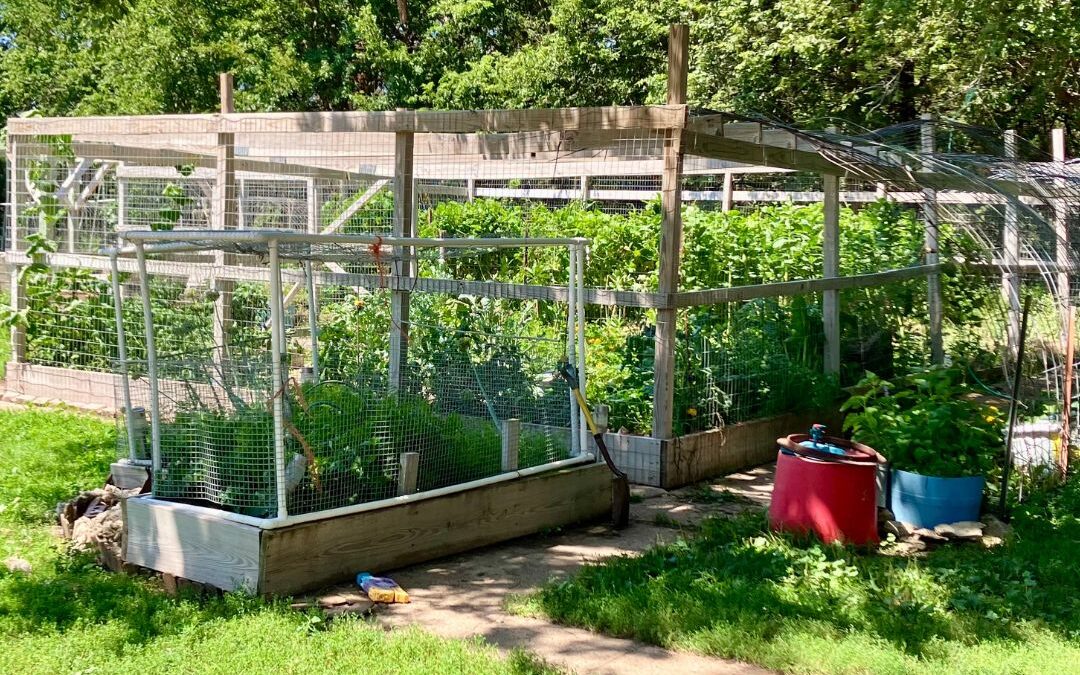
Over the years since that first hard summer, I’ve slowly added to what we do. More garden space. Chickens. Pigs. A milk cow. Animals and garden space that together started providing close to 90% of our family’s food — the animals covering nearly all of our protein. I learned to can. To preserve. To make do, use up, and figure it out.
We still buy flour, pantry staples, some produce that just doesn’t make sense to grow here, and fruit. I’m not trying to be fully off-grid and I’m not living in a magazine spread about sustainable living. I’m a Nebraska farm wife with a full plate, a homeschool schedule, a marketing business, and a deep belief that simple systems create real peace.
But here’s what I’ve come to understand after years of living this way — including through some of the hardest financial seasons our family has ever faced:
Homesteading was never really about the acreage. It was always about the mindset.
What Our Great-Grandmothers Knew That We’ve Forgotten
Before grocery delivery and DoorDash and a freezer full of pre-packaged meals, women ran households like small operations. They preserved the harvest. They kept animals that earned their keep. They made things from scratch — not because it was charming, but because it was cheaper and it worked.
They wasted almost nothing. They planned ahead. They kept a full pantry not as a hoarding mentality but as quiet wisdom — because they understood that seasons change, incomes shift, and a well-stocked root cellar is a form of peace of mind.
They didn’t have a term for what they were doing. But they had the habits. And those habits carried families through dust bowls and depressions and crop failures and wars.
Those same habits will carry yours, too.
The Mindset Shift That Makes All the Difference
When most people hear “homesteading,” they picture a specific image. Remote land. A big garden. Maybe goats. A woman in a linen apron making sourdough at dawn. And while that image isn’t wrong, it’s incomplete — and it leaves a lot of people out.
You can practice a homesteading mindset in a suburban backyard. In a rental with a patio. In a small town with a community garden plot. You can do it with a chest freezer and a pressure canner and an Azure Standard order once a month.
The habits matter more than the acreage.
The mindset — growing what you can, preserving what you grow, wasting as little as possible, building systems that carry your family through the hard seasons — that’s available to anyone willing to start small and stay consistent.
What This Series Is About
Over the next several months, I’m going to walk through the homesteading habits I’ve built into our family’s life — the ones that have shown up for us again and again, not just in the good seasons but in the hard ones. The ones that quietly kept our family fed when our finances were in freefall. The ones that came straight from the women who came before us, whether they lived on a homestead or not.
The series runs through November and is organized into four sections.
We’ll start with The Homestead Foundation — the biggest mistakes beginners make, how to actually get started, and the practical mindset shifts that make everything else possible. This is the part nobody talks about enough.
From there we move into Feeding Your Family Well — scratch cooking, meal planning for busy seasons, stocking a working pantry, and how to keep your family fed well even when money is tight. Real food, real budgets, real life.
Then we’ll spend a few weeks on Community, Mindset & Faith — because homesteading is not a solo sport and nobody told me that early enough. We’ll talk about why you need your people, how to use hard seasons as fuel instead of letting them flatten you, and the values that hold all of it together when things get hard.
We’ll close the series in November with Raising a Homestead Family — what it actually looks like to bring kids into this life, how to work alongside them instead of around them, and what it means to build something your children will remember.
Starting Where You Are
If you’re reading this and you feel like homesteading is for someone else — someone with more land, more time, more know-how — I want to push back on that gently.
I started with a hobby garden and a depleted bank account. My great-grandmother started with a house full of kids and a drought-stricken county and no other choice. Neither of us started from a place of abundance.
We started from where we were.
That’s still how it works. You start with the space you have. The time you have. The one skill you can learn this season. You build slowly, consistently, and without comparing your beginning to someone else’s middle.
The habits are simple. They’re old. And they’re more available to you right now than you probably think.
Come back next week — we’re going to dig into the first one together.
This is the first post in the Homesteading Habits series on withcassandra.com. If you want the full series delivered straight to your inbox, click here and get on the list.
As I’ve grown as an entrepreneur, mom, gardener, and livestock owner, I struggled to find a planner that met my needs and kept me organized. So, I MADE MY OWN. You can look at it on the link below and buy it on Amazon.
Don’t want the whole calendar part? I got you! I pulled the gardening and animal care pages out and put them in a book all their own.
Wanting a community to lean into? Join the FREE Thriving Through Farm Life: Wife’s Support Network! In our community, we embrace the challenges of farm life and provide a supportive space for wives facing the complexities of managing a family farm. Whether you’re navigating financial pressures, day-to-day operations, or seeking ways to create a thriving home, we’re here for you. Explore garden and preservation tips for cultivating your oasis, share insights on animal care, and discover practical family budgeting strategies. Together, let’s grow through challenges, flourish authentically, and sow the seeds for a resilient and thriving farm life. Join us on this journey of resilience and abundance!