
This post may contain affiliate links, which means I may receive a small commission if you make a purchase using these links — at no additional cost to you. I only share things I actually use and believe in.
In 2016, when Jeremy and I moved home to the family farm, I started a garden. Not because I had a plan. Not because I knew anything about soil health or companion planting or any of that. I started one because that’s what Grandma did — and because I could still taste those summer cucumbers straight off the vine and my mom’s homemade canned salsa. That was reason enough.
I had absolutely no idea what I was doing. But I had seeds, a patch of ground, and a whole lot of love for the memory of what a garden could be.
That first garden was more experiment than harvest. But it planted something in me too. These days, we grow or raise roughly 90% of our family’s food right here on 3.4 acres in Nebraska — and it all traces back to that simple beginning.
You don’t need a lot of land. You don’t need a big budget or a master plan. You need a reason that matters to you, a willingness to learn as you go, and a good patch of dirt to start with.
If your goal is self-sufficiency — even partial self-sufficiency — food is where it starts. And when it comes to food, vegetables and fruits are where you’ll get the most return for your effort. Let’s talk about how to make that actually happen.
Start With What Your Family Will Eat
This sounds obvious, but it’s the mistake almost every new gardener makes — I made it too. You get excited, you order seeds for everything that sounds good, and you end up with enough kale to feed a small village. We’re not a big kale family. I grow a little now to tuck into our lettuce mix, but that’s plenty. The chickens got the rest of that first harvest, and honestly, they were thrilled about it.
Before you commit space, energy, and soil amendments to a crop, buy a small amount at the grocery store or farmers market first. Try it. Cook it a few different ways. See if your family will actually eat it.
Grow primarily what you’ll consume. Leave a little room to experiment — I always plant one or two things each year that we’ve never tried — but don’t let curiosity take over half your garden at the expense of the staples your family depends on.
For us, that means tomatoes, green beans, potatoes, peppers, onions, garlic, and carrots are non-negotiables every single year. They go in the ground because I know they’ll get eaten. Everything else is bonus.
Choose a Gardening Method That Works for You
There is no one right way to grow a garden. I’ve tried most of them over the years, and honestly, we run a hybrid approach now — I use both traditional in-ground rows and raised beds, and I pull from the Back to Eden and square foot philosophies within both. Don’t feel like you have to pick just one and stick to it religiously. Let your space and your season teach you what works. Here are the main methods worth knowing:
Traditional Row Garden — The classic. Works well for larger plots, easy to till and weed between rows. Great for things like corn, potatoes, and sprawling vines.
Square Foot Gardening — Intensive planting in raised beds divided into one-foot squares. Maximizes small spaces and is very beginner-friendly. Mel Bartholomew’s method changed how a lot of people think about small-space growing. This is actually the method I use for my kids’ raised beds — the grid makes it easy for them to understand spacing and take real ownership of what they’re growing.
Back to Eden — A no-dig method that mimics how the forest floor naturally builds soil. The idea is simple: your soil stays covered with a thick layer of mulch — wood chips or old hay both work great — which smothers weeds, holds moisture, and slowly breaks down into rich organic matter. When it’s time to plant, you simply move the mulch aside, tuck your seed or transplant in, and move on. No tilling, no turning, no disrupting what’s already happening underneath. In the fall, after the season wraps up, you add compost if the soil needs it and then lay down another fresh layer of mulch to protect and feed the soil over winter. Come spring, it’s ready to go again. Less watering, dramatically fewer weeds, and incredible soil that just keeps getting better. It takes some patience in the first season, but the longer you do it, the less work it becomes.
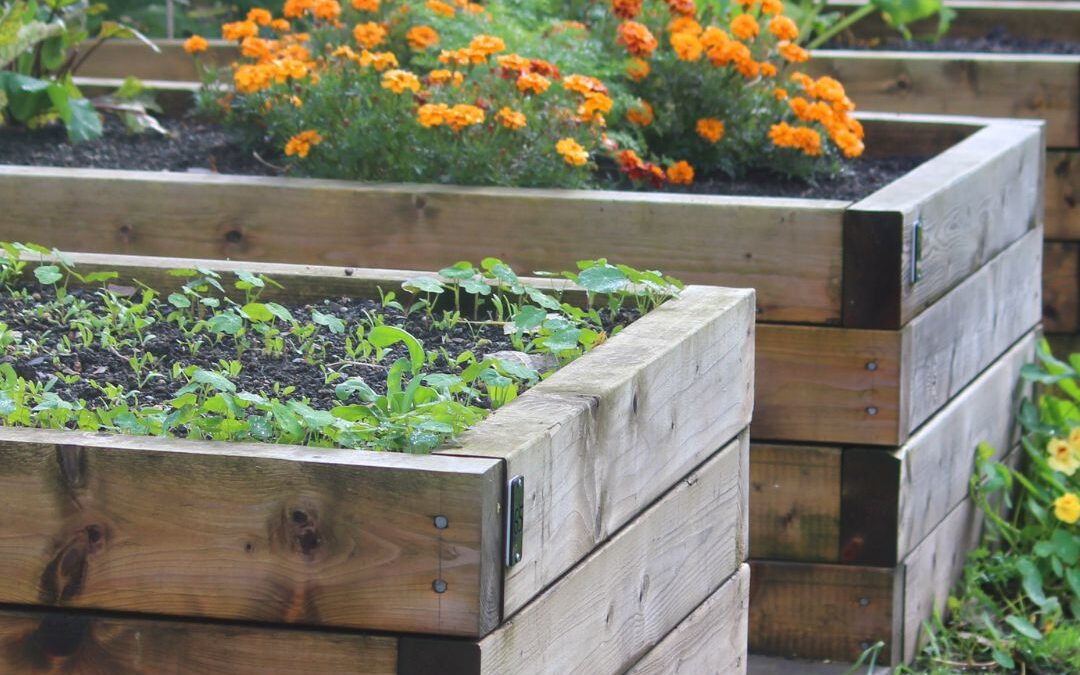
Raised Beds — I’ve been converting some of mine to perennial beds this year — strawberries and chamomile have moved in — and I’m planning to move some herbs to the beds near the pond this fall. Raised beds give you control over your soil and are easier on your back. One thing I’d tell anyone building them: go at least three feet high if you have free range chickens. Short raised beds are basically an open invitation — they’ll jump right in and dig for bugs the second you turn your back, and your seedlings will pay the price.
Pick one method and try it. You can always adjust. What matters most isn’t the method — it’s that you actually start.
Don’t Overlook the Flowers
I used to think flowers were a luxury. Pretty, sure — but not practical. I was wrong.
When I started learning about polyculture gardening (more on that in a minute), I realized flowers are doing real work in a productive garden. Marigolds deter nematodes and aphids. Nasturtiums attract aphids away from your vegetables. Borage draws pollinators and repels tomato hornworms. Zinnias and lavender bring in the bees and butterflies that your squash, cucumber, and pepper plants desperately need for pollination.
The bees don’t care if your garden is pretty. But it turns out, the things that make a garden pretty are often the same things that make it productive. That’s not a coincidence — that’s polyculture.
What Is Polyculture Gardening (and Why Does It Matter)?
Polyculture is simply the practice of growing multiple types of plants together in ways that benefit each other. It’s the opposite of monoculture — that long row of only tomatoes, or only corn, which requires more inputs and is more vulnerable to pests and disease.
You’ve probably heard of companion planting. Polyculture is the broader principle behind it.
In a polyculture garden, you might plant:
- Basil alongside tomatoes (improves flavor, deters pests)
- Marigolds along the border (nematode deterrent)
- Pole beans climbing a trellis near corn (beans fix nitrogen that corn depletes)
- Dill near your brassicas (attracts beneficial wasps)
The plants work together. You get more food, fewer problems, and healthier soil — without reaching for a chemical fix every time something goes sideways.
What About an Orchard?
If you have any space at all — even a corner of a yard — fruit trees and berry bushes are worth considering. Yes, they take time to establish. A fruit tree might not give you a meaningful harvest for three to five years. But once they’re producing, they produce for decades. It’s one of the most patient investments a homesteader can make.
Even a small polyculture orchard — a few dwarf fruit trees, some berry bushes, flowering companion plants underneath — can give you a significant amount of fruit in a very small footprint.
Here’s what polyculture looks like in an orchard setting:
- Plant comfrey under fruit trees (dynamic accumulator — deep roots bring up minerals, leaves mulch and fertilize)
- Add clover between trees for nitrogen and pollinator habitat
- Tuck berry bushes in the understory where they get partial shade
- Plant flowering herbs like fennel, dill, and borage nearby to attract beneficial insects
Pests that would devastate a monoculture orchard have a much harder time getting a foothold when the ecosystem around your trees is diverse and alive.
Map It Before You Plant It
Whether you’re planning a vegetable garden or a small orchard, make a map before you put anything in the ground. I know it feels like extra work when you just want to get outside and plant — but it saves so much frustration later.
A garden map helps you:
- Plan spacing and sun exposure accurately
- Rotate crops from year to year (which protects your soil and reduces disease)
- Remember what’s planted where (because I promise, your little helpers will pull up the plant markers, and you will stand in the garden absolutely baffled about what’s growing where)
- Track what worked and what didn’t so you can adjust next year
I keep my garden map in my Homesteading Planner — the same one I’ve been using to track our seasonal tasks, livestock records, and budgets. The garden planning pages are laid out for exactly this: plot out your beds, track your varieties, note your planting dates. It keeps everything in one place so I’m not hunting through random notebooks in February trying to remember which tomato variety did well last summer.
If you don’t have a system yet, that’s a good place to start. You can find the Homesteading Planner on Amazon — it’s built for exactly the kind of organized-but-real homesteading life we’re all trying to live.
The Simplest Way to Think About This
You don’t need to do it all at once. You don’t need the perfect setup, the best soil, or a five-year master plan before you plant your first seed.
Start with the vegetables your family loves. Make a simple map. Plant a few flowers alongside your vegetables. Give it one season and see what you learn.
The goal isn’t perfection. The goal is food on your table that you grew yourself — and the quiet confidence that comes with knowing you can.
That’s stewardship. And it starts with one small patch of dirt.
Want to get more organized this growing season? The Homesteading Planner has garden planning pages, seasonal checklists, and everything you need to track your homestead in one place. Available on Amazon.
Wanting a community to lean into? Join the FREE Thriving Through Farm Life: Wife’s Support Network! In our community, we embrace the challenges of farm life and provide a supportive space for wives facing the complexities of managing a family farm. Whether you’re navigating financial pressures, day-to-day operations, or seeking ways to create a thriving home, we’re here for you. Explore garden and preservation tips for cultivating your oasis, share insights on animal care, and discover practical family budgeting strategies. Together, let’s grow through challenges, flourish authentically, and sow the seeds for a resilient and thriving farm life. Join us on this journey of resilience and abundance!
As I’ve grown as an entrepreneur, mom, gardener, and livestock owner, I struggled to find a planner that met my needs and kept me organized. So, I MADE MY OWN. You can look at it on the link below and buy it on Amazon.