
This post may contain affiliate links, which means I may receive a commission if you make a purchase using these links, at no additional cost to you.
My first garden was a pile of rocks.
Not by choice — by history. The spot we garden in now sits in the foundation of an old house on our place. The previous owner never had luck growing anything there, so at some point he’d rocked the whole area over. After he passed, it grew up in shrub trees and sat that way for years.
The summer we finally tackled it, my husband pulled the big trees out with the tractor and buried the rocks. We hauled dirt up from the old feedlot to fill it in. We argued — for real, more than once — about how big the fire pit should be versus how big the garden should be. He wanted more garden. I wanted more fire pit. He won that round.
That first year, I didn’t plant a single thing. I was going between Lincoln and home for school all summer, and he was the one home planting sweet corn. The next summer, I was finally home for good, working full time, and I spent most of my spring evenings raking rock out of the dirt by hand. That year I bought a few tomato, pepper, and cucumber plants that promptly took over more space than I expected. It wasn’t impressive. But it was a start.
If you’re standing at the edge of your own patch of dirt right now — whether it’s rocky, weedy, or just intimidating in its emptiness — every productive garden you’ve ever admired started exactly like that. Small, messy, and a little unsure of itself.
Every Garden Starts Somewhere Small
Since that first rocky season, our garden has grown bigger, more diverse, and more productive every single year. It’s expanded past the original space into raised beds around the pond, moved the fire pit twice, and turned into something that actually feeds our family. None of that happened in one summer.
It happened because I kept showing up to a small task instead of demanding a finished garden all at once.
This is one of the truest things I know about homesteading, and about most seasons of life: if you try to do it all at once, you’ll get overwhelmed and quit. Start small, but start somewhere. That’s not a consolation prize — it’s actually the strategy that works.
How to Decide What to Plant This Year
Once you’ve got a spot picked out, the next hurdle is standing in the greenhouse or staring at a seed catalog wondering what on earth to actually buy — and then wondering how you just spent that much money.
Here’s the framework that keeps me from over-planting the wrong things every year.
Start with what your family actually eats. We plow through lettuce and spinach all spring and summer. Tomatoes are non-negotiable with how much pasta and how many tacos we go through year-round. Kidney beans? Almost never. So there’s a lot of tomatoes growing and none of the beans nobody’s eating. If you’re not sure what your family will go for, buy a few things from the store first and see what disappears. That’s how I found out my kids, against all odds, love Brussels sprouts.
Check what your zone will actually support. Loving a fruit doesn’t mean you can grow it. We’re in zone 5b in Nebraska, and much as we love oranges and pineapple, that’s simply not happening here. What does grow well for us — apples, pears, strawberries — gets the space instead.
Be honest about the time it takes to grow, harvest, and preserve. Some crops just aren’t worth the hours. Kidney beans take forever to harvest for what you get back — you can buy the same quality cheaper at the store. Peas are the opposite problem: we love them, but preserving them isn’t worth it to me, so I grow just enough to eat fresh off the vine and call it good.
The whole point of growing your own food is cutting down your grocery bill and eating better — which only works if you’re growing what your family will eat, in a space that can support it, with time you actually have.
Little By Little: Keeping the Garden From Overwhelming You
People ask me all the time how I get it all done once the garden’s in full swing. The honest answer is: little by little. Here’s what’s made the biggest difference over the years.
Mulch deep — really deep. Not the thin dusting you’d put down with grass seed. Think 4 to 6 inches of mulch. It holds moisture in the soil and blocks the majority of weed growth before it starts. You’ll still weed some. You just won’t lose your whole summer to it.
Tackle small sections instead of the whole garden. This one took years to actually practice instead of just know. Looking at everything that needed planting, weeding, watering, and prepping all at once was a fast track to freezing up under the size of it. Dividing the garden into physical zones — this bed, that row, the area by the fence — and then tackling whatever that zone needs, whether it’s planting, weeding, watering, harvesting, or a combination, made the work doable instead of paralyzing.
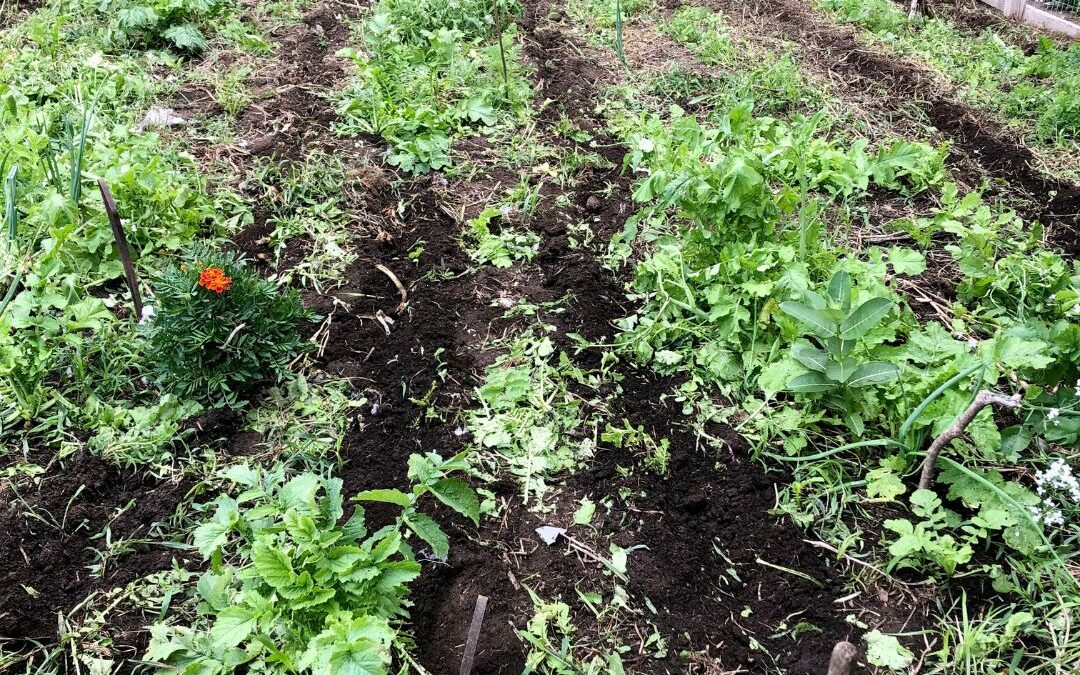
Add one new thing at a time. If you’re just starting out, resist the urge to grow everything the first year. This garden started with sweet corn, pumpkins, cucumbers that took over more space than planned, a tomato plant, and a pepper plant. That’s genuinely it. Every year since, one or two new varieties got added, got comfortable, then a few more the next year. Small test patches let you experiment without wasting space on something that flops.
Try companion planting. This started by accident — literally couldn’t fit all the tomatoes in one spot, so they got mixed in with other plants. The bug damage dropped noticeably. Since then, basil goes around the tomatoes on purpose, since it repels the pests tomatoes attract, and there’s more basil to show for it too. Win-win.
You Don’t Need It All Figured Out to Start
Here’s what I’d tell myself back in that first rocky, rabbit-fenced garden if I could: you don’t need the perfect plan, the perfect spot, or even a full season to plant anything. You need a small patch, one or two things worth growing, and the willingness to let it be imperfect the first year.
That’s stewardship, not hustle — taking care of what’s in front of you today instead of demanding the whole homestead overnight.
If you want help figuring out what to plant, when, and where — without losing track of it all by July — that’s exactly why I use a blank Homesteading Planner. No set start date, so you can pick it up today, whatever the date is, and roll forward a full 12 months from wherever you are.
As I’ve grown as an entrepreneur, mom, gardener, and livestock owner, I struggled to find a planner that met my needs and kept me organized. So, I MADE MY OWN. You can look at it on the link below and buy it on Amazon.
Don’t want the whole calendar part? I got you! I pulled the gardening and animal care pages out and put them in a book all their own.
Wanting a community to lean into? Join the FREE Thriving Through Farm Life: Wife’s Support Network! In our community, we embrace the challenges of farm life and provide a supportive space for wives facing the complexities of managing a family farm. Whether you’re navigating financial pressures, day-to-day operations, or seeking ways to create a thriving home, we’re here for you. Explore garden and preservation tips for cultivating your oasis, share insights on animal care, and discover practical family budgeting strategies. Together, let’s grow through challenges, flourish authentically, and sow the seeds for a resilient and thriving farm life. Join us on this journey of resilience and abundance!